On your marks! Get set! Oops, false start…
Should we really be surprised that the first week of the El Mansouri government has generated more headlines about a minister who never even took office than about the programme that will shape the country’s future for the next five years?
First, the facts, as far as they are known.
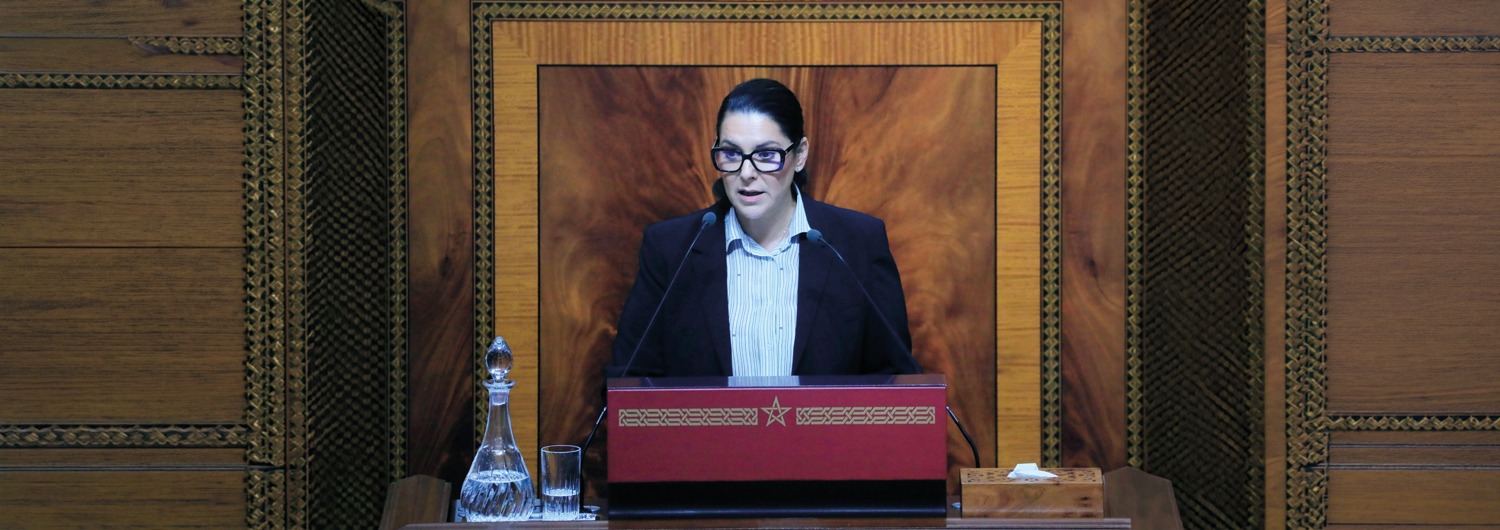
On Friday, October 16, Madiha Khayr, an Istiqlal MP from Béni Mellal who had recently been appointed president of her party’s parliamentary group, was named Minister Delegate for Vocational Training and Qualifications.
The very next day, a psychiatric certificate dating from around 2004 and an old newspaper article describing a case involving forgery, identity theft and nineteen bounced cheques, allegedly involving a woman named Madiha, began circulating on social media.
On Sunday, October 18, at the request of the Head of Government, the Royal Cabinet announced in a statement that His Majesty the King had terminated her appointment under Article 47 of the Constitution.
The Khayr affair is extraordinary on several counts.
But the government has neither commented on the contents nor confirmed the authenticity of the documents. No formal connection has ever been established between the psychiatric certificate and the judicial case, while both the woman concerned and her party have remained silent.
A minister was therefore removed on the strength of old documents dug up and thrown to the wolves, some of which fall under the most basic principles of medical confidentiality.
The government spokesperson cited a « political and institutional assessment » shared by the entire majority, intended to avoid jeopardising the government’s investiture.
Fair enough.
But if, as press reports suggest, the Head of Government knew nothing about the matter, then the question is no longer about Madiha Khayr. It is about the screening process.
Who checks what, when, and with what degree of diligence before a name is submitted to the Sovereign?
The parties, which hand out ministerial portfolios like rewards? Or the Executive, which accepts their nominees with its eyes closed?
Whatever the case, the first breach of trust runs deep.
In a country where distrust of the political class has spilled onto the streets, driven in particular by a younger generation that no longer believes in promises, this episode reinforces the worst possible stereotype: that of elites appointing one another within their own closed circles, without scrutiny or accountability.
The government had not even received its parliamentary investiture before it was already managing its first crisis.
But the most insidious damage lies elsewhere.
The appointment of Fatima Ezzahra El Mansouri, the first woman to lead a Moroccan government, was supposed to change how women are perceived in public life.
Instead, the first female Head of Government has had to make her first decisive act of authority the dismissal of another woman, against the backdrop of a psychiatric certificate.
The anti-feminists could hardly have asked for more.
And while nobody has ever concluded from the misconduct of a male minister that men are unfit to govern, women bear precisely that burden: every individual mistake is held against an entire gender.
That is also why this casting error will cost this government more than it would have cost another.
Yet on Monday, October 19, addressing both chambers of Parliament in a joint session, the Head of Government presented a programme that, for once, ventured into the territory of actual figures.
« We want to move from expanding social protection coverage to improving the quality of services, from the volume of investment to its returns, and from multiplying programmes to ensuring their complementarity and tangible impact, » she declared.
It was a philosophy of consolidation rather than rupture.
On purchasing power, direct social assistance, income tax, retirement benefits, pensions, youth training and even education, the programme is backed by numerical targets.
On paper, then, it is a serious piece of work.
But the Head of Government was careful to qualify her ambitions, specifying that the majority’s electoral commitments would be implemented « progressively, with due regard for operational realism and the sustainability of public finances. »
Translated into plain English: not everything that was promised will necessarily be delivered. Or not immediately. Or not in full.
The first real test will therefore be the 2026 Finance Bill, approved by the Government Council on October 20 and now in the hands of Parliament.
Because this will be the programme’s first translation into budgetary terms, and its first moment of truth.
And the first hundred days will reveal whether this programme is a genuine roadmap or merely a catalogue.
For expectations are enormous, particularly on the social front.
Direct assistance doubled, pensions increased, young people trained and integrated into employment, household bills reduced: each of these promises speaks to millions of families who are counting their dirhams long before the end of the month.
But even more than the amounts involved, it is the timetable and the method of implementation that will determine this government’s credibility.
Which measures will take effect in 2027? Which in 2028? With what funding, and according to which performance indicators?
All too often, the phrase « by the end of the term » has served as a convenient refuge for the most expensive commitments.
And experience has now established what happens at the end of a term: there is neither a proper assessment nor any real accountability.
Just another election campaign.
And another round of promises.
Zouhair Yata